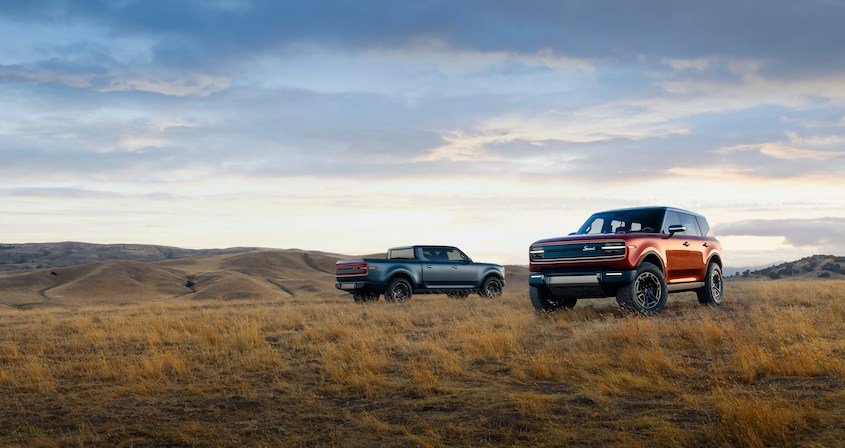
Scout Motors, the iconic brand that helped define the American SUV, is officially staging an all-electric comeback under the Volkswagen Group with the unveiling of its new Terra truck and Traveler SUV concepts. Designed as body-on-frame vehicles built on a proprietary EV platform, both models are slated for production in 2027 with a target starting price under $60,000.
By blending historical design cues with modern electric engineering, Scout aims to capture a market segment currently wary of hyper-minimalist, touchscreen-heavy vehicles. CEO Scott Keogh describes the new lineup as “heritage meets ingenuity,” positioning the brand to compete in the rugged off-road space.

The “Connection Machine” Philosophy
Scout is distancing itself from the industry trend of minimalist interiors. Instead, the company is focusing on tactile, mechanical interactions—what it calls the “Connection Machine.” The vehicles feature physical door handles, chunky switches, grab bars, and optional bench seating, designed to foster a more visceral connection between the driver, the passengers, and the road.

Beyond the aesthetic, the performance specs are aggressive: the vehicles are engineered with a solid rear axle, mechanical lockers, and the capability to hit 0-60 mph in 3.5 seconds. With over 1,000 pound-feet of torque, the Terra is expected to offer a 10,000-pound towing capacity, while the Traveler aims for 7,000 pounds.


Advanced Engineering and Zonal Architecture
Scout is adopting a modern zonal electrical architecture, a departure from the traditional domain-style systems found in most legacy vehicles. This setup allows for more efficient over-the-air updates and remote diagnostics, effectively future-proofing the vehicle’s IT infrastructure. While Tesla has long utilized this approach, its adoption by Scout—supported by its parent company Volkswagen—signals a significant shift in how the brand intends to manage long-term maintenance costs.

Building a Bespoke Platform
Perhaps most surprisingly, Scout has opted to develop its own proprietary body-on-frame platform rather than utilizing Volkswagen’s existing “MEB” electric platform. Keogh emphasized that Scout cannot simply be a “badge” on a shared platform. By maintaining independence in its core chassis design, the company aims to ensure the vehicles can handle true off-road conditions, despite sharing some secondary modules with the broader VW group.

Addressing Range Anxiety
To appeal to truck buyers who demand reliability, Scout is introducing an optional gas-powered range extender. This generator charges the battery rather than driving the wheels, providing an extended range of over 500 miles. For those sticking to pure electric, the standard trim offers a 350-mile range. This dual-approach is designed to bridge the gap for traditional truck owners, offering electrification on terms that feel practical for heavy-duty use.


The design language strikes a balance between the familiar and the fresh, drawing subtle inspiration from industry staples like Ram and Range Rover while honoring the original International Harvester Scouts. By avoiding the “dystopian” aesthetic of some modern EVs, Scout hopes to carve out a unique space in the evolving automotive landscape.