
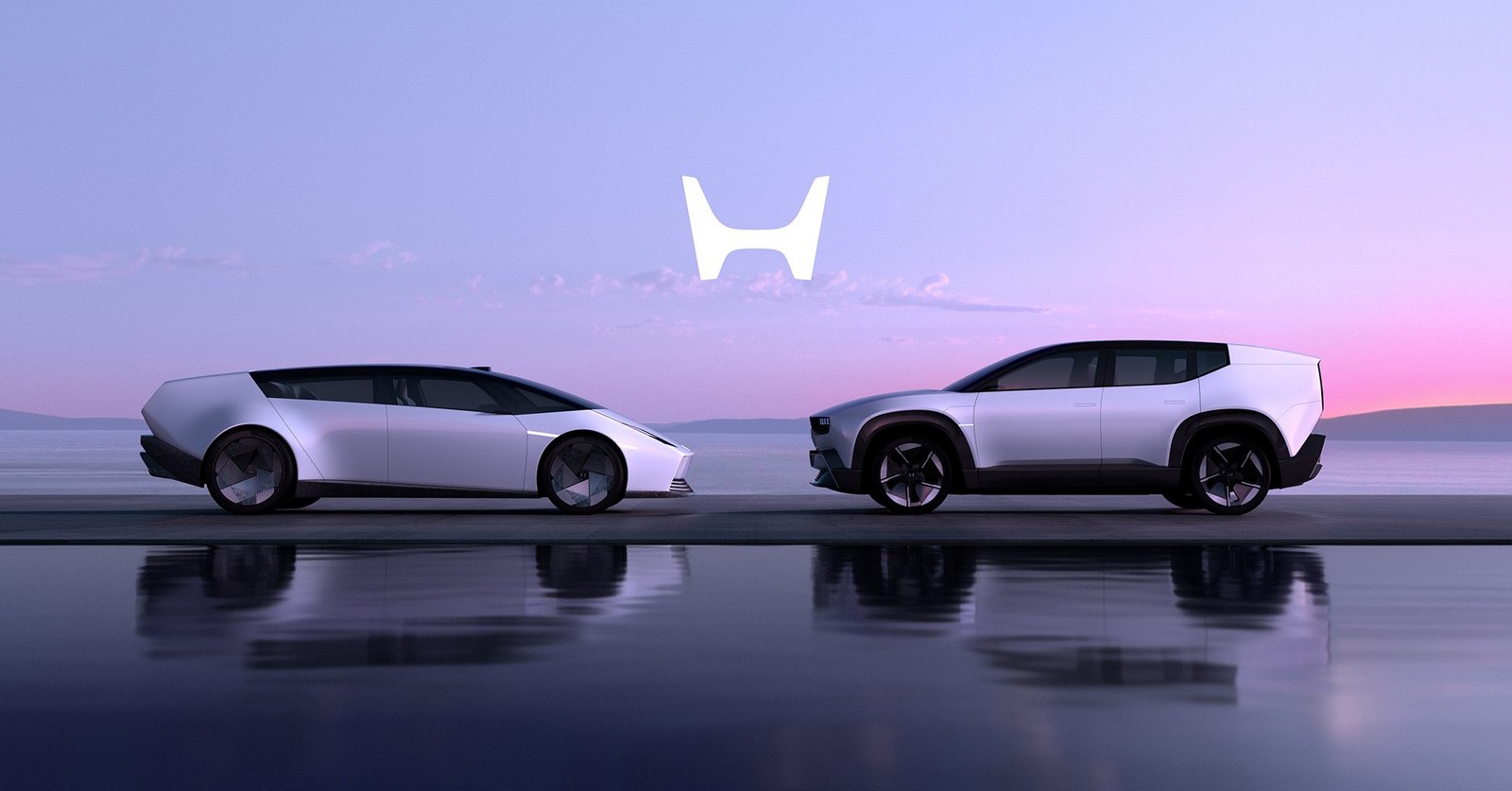
Honda has officially abandoned its ambitious Zero Series SUV and Saloon, alongside the Acura RSX EV project, as the automaker grapples with an “extremely challenging” financial landscape that threatens its first annual loss in five decades.
A Historic Financial Downfall
The Japanese automotive giant, which previously attempted a failed merger with Nissan last year, projects a staggering net loss between ¥360 billion (~$2.5 billion) and ¥630 billion (~$4.4 billion) for the fiscal year ending this month. According to The Financial Times, this would mark Honda’s first annual recorded loss since going public 50 years ago.

Compounding these fiscal woes is a massive write-down on its electric vehicle investments, estimated between ¥340 billion and ¥570 billion ($2.14 billion to $3.58 billion). Facing new tariff pressures under the Trump administration, the company is being forced to dismantle its aggressive electrification roadmap, which once targeted 30 new EVs by 2030 and full carbon neutrality by 2050.
Industry-Wide EV Retreat
Honda is not the only legacy manufacturer struggling to navigate the cooling demand for electric vehicles and fierce competition from Chinese manufacturers. The broader automotive sector is currently facing a reckoning, with Ford announcing a historic $19.5 billion write-down, GM recording a $7.6 billion charge, and Stellantis reporting a massive $26.6 billion hit due to EV-related losses.

The End of the “Zero” Vision
The Zero Series was intended to bridge the gap between futuristic technology and affordability. By leveraging design cues from iconic 70s and 80s vehicles—such as the Lamborghini Countach, AMC Gremlin, and Aston Martin Lagonda Shooting Brake—and incorporating Formula 1 racing expertise, Honda hoped to deliver EVs with a 300-mile range. Those ambitions have now been shelved.
Citing a significant decline in market demand, Honda confirmed it is pivoting its strategy back toward hybrid powertrains. This shift reflects a wider industry trend of abandoning pure-electric lineups in favor of more stable, traditional profit drivers as the global EV transition hits a major roadblock.