
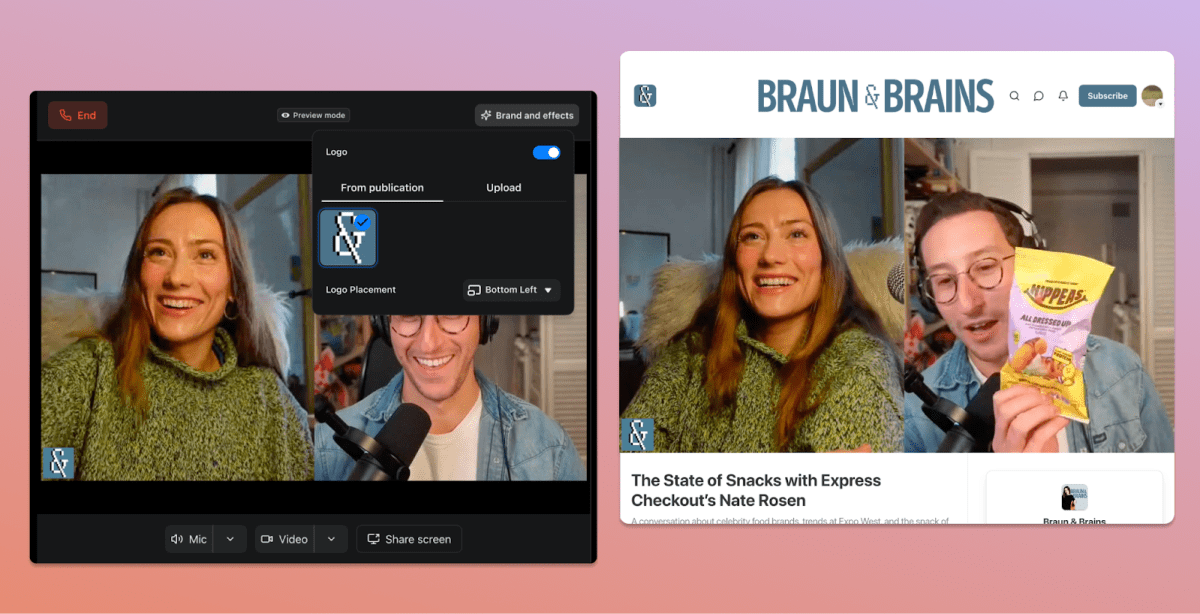
Substack has officially launched the Substack Recording Studio, a new desktop-based tool that enables creators to record, edit, and publish high-quality video content directly within the platform.
Streamlining the Video Production Workflow
The new studio environment is designed to simplify the technical hurdles of content creation. It supports solo recording sessions and collaborative conversations featuring up to two guests. Creators can enhance their professional presence by applying custom watermarks and utilizing screen-sharing features during calls. Once a session concludes, the platform automatically generates clips and thumbnails, streamlining the distribution process.
“Until now, creating video on Substack meant going live, or stitching together a separate stack of tools: a recording platform, a way to create and distribute clips, and something to design a thumbnail,” the company noted in a blog post. “Substack Studio brings all of those tools into one place.”
Data-Driven Growth for Multimedia Creators
The push into native video tools is backed by strong performance metrics. According to internal data, creators who have integrated audio or video content into their Substack newsletters over the past 90 days have seen their revenue grow 50% faster than those relying solely on text.
Substack’s Evolution Beyond Newsletters
While originally established as a newsletter-first platform, Substack has aggressively pivoted toward becoming a comprehensive multimedia hub. Since enabling video uploads in 2022, the company has introduced livestreaming, monetization features, and a $20 million Creator Accelerator Fund to attract talent from competing platforms.
This multimedia strategy extends to the living room as well. Substack recently debuted a dedicated TV app for Apple TV and Google TV, featuring a “For You” discovery feed similar to TikTok. This move aligns with broader industry trends toward long-form consumption on larger screens; notably, YouTube reported that viewers watched over 700 million hours of podcasts on living room devices monthly in 2025, signaling a massive shift in how audiences engage with creator-led video content.