Meta announced new impersonation detection tools and stricter “original content” guidelines this Friday, a direct response to widespread user complaints regarding the platform’s recent evolution into an “AI slop hellscape.”
Cracking Down on Unoriginal Content
Building on a crackdown initiated last year, Meta is intensifying its war on spam and low-quality posts. By penalizing the repeated reuse of photos, text, and videos, the company intends to elevate authentic creator content and push back against the AI-generated flood that has increasingly tarnished Facebook’s reputation.
This strategy is vital for Facebook’s future as a viable creator economy. If the platform becomes overrun with AI slop, legitimate creators risk losing visibility and monetization opportunities, ultimately driving them to abandon the site for more creator-friendly destinations.
Measuring Progress Against Impersonators
Meta reports that its recent initiatives are yielding results: viewership and time spent on original content roughly doubled during the second half of 2025 compared to the previous year. Furthermore, the company claims to have removed 20 million accounts last year, resulting in a 33% decline in impersonation reports targeting major creators.
Streamlining the Reporting Process
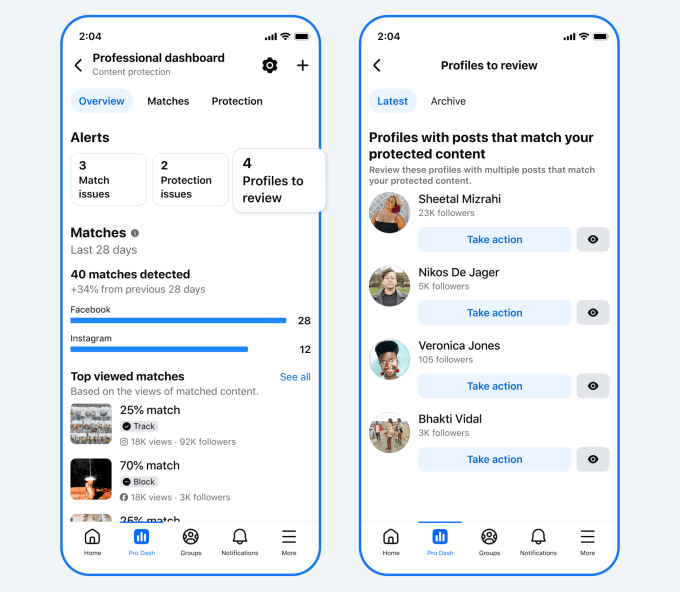
Facebook is currently testing enhancements to its content protection tools. The goal is to provide a centralized dashboard where creators can flag Reels repurposed by impersonators. By consolidating the reporting workflow, Meta hopes to speed up response times.
However, there remains a critical gap: these tools primarily identify duplicate content rather than unauthorized uses of a creator’s personal likeness, an issue that continues to demand attention.
Defining “Originality” in the Age of AI
Meta is not alone in this struggle; YouTube recently expanded its own deepfake detection capabilities for high-profile figures. As part of its broader strategy, Meta is updating its content guidelines to clarify what constitutes “original” material.
Under the new definitions, original content includes material filmed or produced directly by the creator, as well as remixes or content that adds substantial value through commentary, discussion, or unique information. Conversely, content that relies on minor edits—such as simple re-uploads, added borders, or basic captions—will be flagged as unoriginal and deprioritized in the feed.