

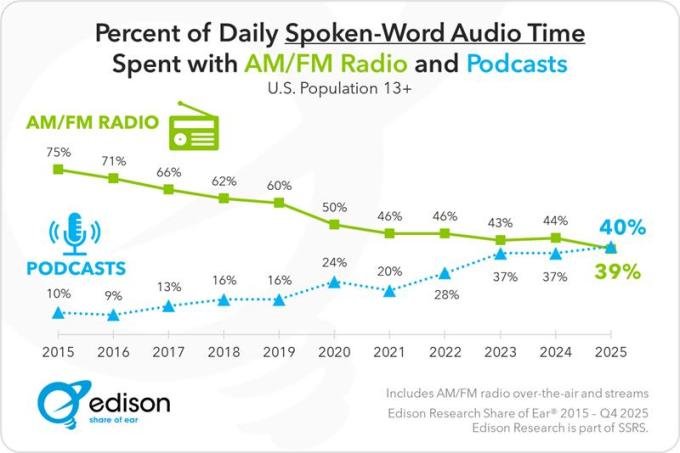
Podcasts have officially surpassed AM/FM talk radio as the dominant medium for spoken-word audio in the United States, according to the latest Share of Ear survey by Edison Research.
A Decade of Shifting Habits
Researchers have monitored these listening trends for over a decade, documenting a consistent decline in traditional radio engagement alongside the steady rise of on-demand audio. This year marks a historic milestone: podcasts now account for 40% of spoken-word listening time, nudging past the 39% share held by traditional radio broadcasts.
While the transition may seem slow to some, the endurance of traditional radio—excluding music programming—highlights the medium’s lasting appeal. Nevertheless, the numbers confirm that the listener preference has finally tipped in favor of digital audio formats.
The Rise of the Video Podcast
A significant driver of this growth is the emergence of video podcasts, now widely available on platforms like Spotify and YouTube. Industry giants are taking note; for instance, Netflix is currently securing deals with iHeartMedia and Barstool Sports to integrate podcast content into its streaming service, effectively replacing the traditional daytime talk show format.
This strategy aligns with viewer behavior. According to YouTube, users watched 700 million hours of podcasts on living room television sets in 2025, a substantial increase from the 400 million hours recorded the previous year.
Genre Preferences and Audience Behavior
Despite the surge in video consumption, audio-first listening remains resilient. Data from Triton Digital’s U.S. Podcast Report for 2025 indicates that 80% of consumers over 18 engage with both audio and video formats. Only 13% stick exclusively to audio, while a mere 7% consume podcasts solely through video.
Listener preferences often correlate with the genre. Video content dominates categories such as music, sports, comedy, and news. Conversely, genres like science, history, fiction, and true crime maintain a stronger footprint in pure audio formats.
Edison’s data reinforces this hybrid consumption model. Among the estimated 115 million weekly podcast listeners in the U.S., 85%—those aged 13 and older—now engage with podcasts that include some form of video component, representing a 7% increase since 2023. Notably, only 5% of this audience reports watching podcasts without also listening to them.