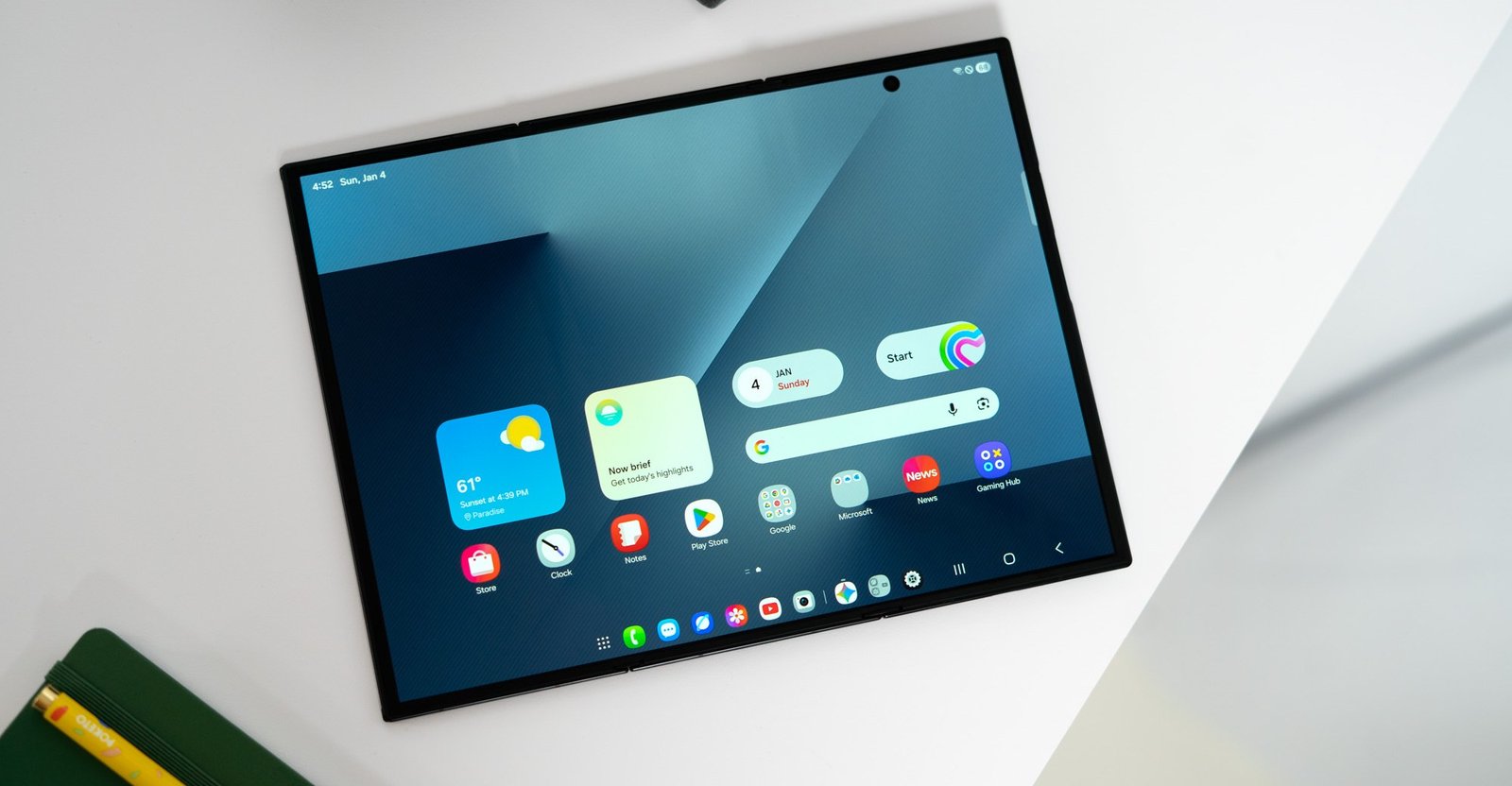
Samsung is officially pulling the plug on its ambitious Galaxy Z TriFold just three months after its US debut, citing prohibitive production costs and a lack of profitability. The company confirmed to Bloomberg that it will wind down sales of the $2,899 device, beginning in Korea before finalizing the exit in the US once existing stock is exhausted.
A Sudden End for a Premium Foldable
The decision follows a report from the Korean outlet Dong-A Ilbo, which indicated that the TriFold would receive a final domestic restock on March 17th. Samsung’s official website has already ceased providing future availability updates, with the device currently marked as “sold out” across US listings.

Market penetration has been remarkably thin. Since its launch in Korea on December 12th, only 6,000 units were reportedly stocked and sold domestically. While competitors like Huawei have moved forward with second-generation trifold technology, their availability remains largely confined to the Chinese market, leaving the Galaxy Z TriFold in a unique but short-lived position.
Inventory Scarcity and Market Outlook
For US consumers, securing a unit is becoming increasingly difficult. While some Samsung Experience Stores in Texas and New York reportedly still hold limited floor stock, online inventory has virtually evaporated. Prospective buyers looking to secondary markets or third-party resellers should exercise significant caution, as the lack of official support and hardware longevity concerns loom large.

Why Samsung is Pulling the Plug
The primary driver behind the discontinuation is the unsustainable cost of production. Rising component prices have made it nearly impossible for Samsung to achieve a profit margin on the device, even at its premium price point.
Looking ahead, the future of the technology remains uncertain. Won-Joon Choi, head of Samsung’s mobile business, recently indicated that the company has not committed to a successor. However, the engineering lessons learned from the TriFold—specifically regarding its expansive display and unique aspect ratio—are expected to influence the design architecture of future devices in Samsung’s foldable lineup.