
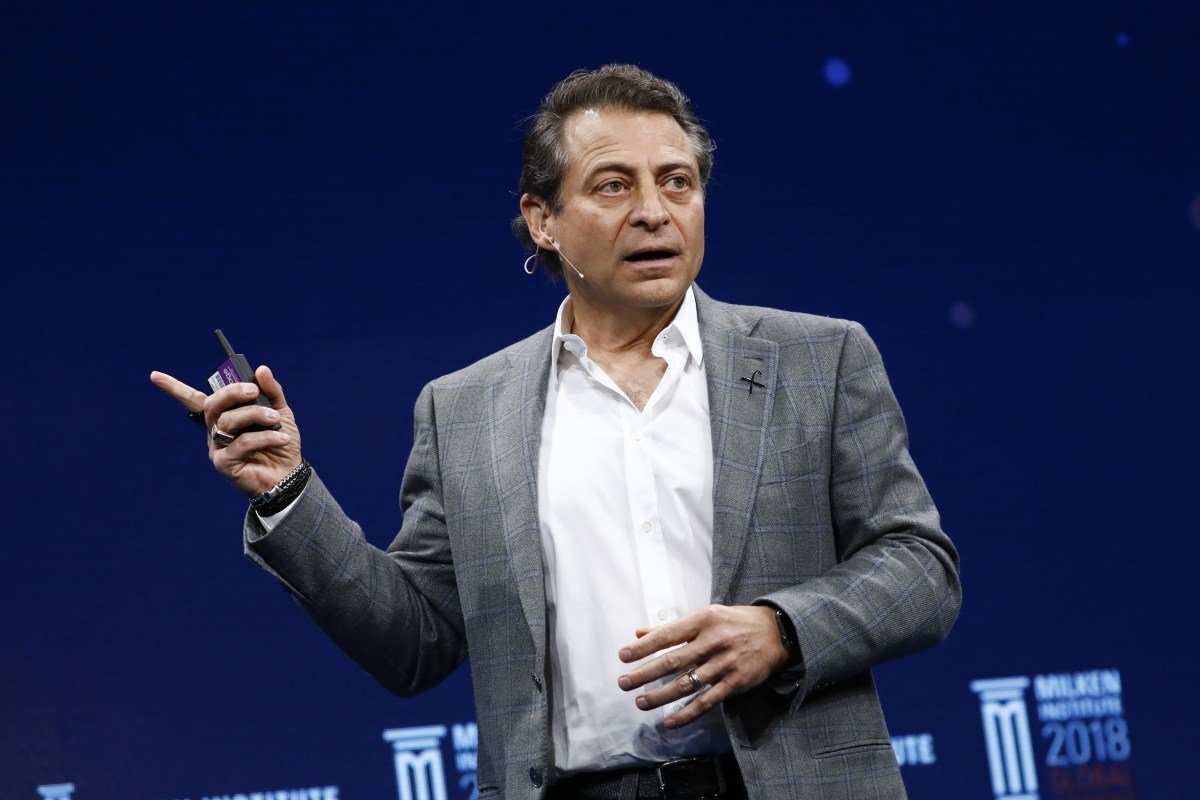
Peter Diamandis, founder of the Xprize, has launched the “Future Vision Xprize,” a competition challenging filmmakers to move past dystopian narratives and visualize a hopeful, tech-driven future—much like the optimistic world of Star Trek. The contest, which opens for submissions on March 9 and closes August 15, aims to counter widespread societal anxiety by rewarding creators who can craft compelling, technology-inspired stories.
Combating the Narrative of Dread
“Right now, there’s a huge amount of growing uncertainty in people’s lives. Will my kids have a job? Will I have a job?” Diamandis noted. He argues that the rapid pace of change, often fueled by “negative stories about tomorrow,” makes it increasingly difficult for individuals to envision a positive path forward.
However, Diamandis sees a different reality. Sitting at the intersection of artificial intelligence and longevity research, he believes it has never been easier for anyone with a bold idea to bring it to life. “The most powerful tools on the planet are free and available to everybody,” he said, citing consumer AI models from companies like Google, OpenAI, and Anthropic. “We have democratized and demonetized the ability for people to solve problems.”
The Human Element in the Age of AI
While AI is currently revolutionizing sectors like longevity—helping researchers map out the complexities of our 40 trillion human cells—Diamandis is cautious about its role in the competition. He warns that entries consisting entirely of “AI slop”—content fully generated by machines without human intervention—are unlikely to win.
“I don’t want an AI-generated script and an AI-generated film without the human,” he emphasized. “The humanity of it all is really important.”
How the Competition Works
The Future Vision Xprize is supported by the 100 Zeros initiative, a partnership between Google and production house Range Media Partners. This collaboration aims to help filmmakers utilize advanced tech tools—such as Google’s Veo video-generation model and the video-creation tool Flow—to tell their stories.
Participants must submit a three-minute trailer. These submissions will be hosted on YouTube, where they will be open for public viewing and feedback. A panel of judges led by Range Media will select a shortlist of projects to receive funding for the production of a 10-minute short film.
Prizes and Future Impact
The grand prize winner will be chosen from the short film finalists, receiving $2.5 million in production funding to develop a feature film, along with a $100,000 cash prize. Additionally, the winning project will be featured on the crowdsourcing platform Republic to help secure an extra $5 million to $10 million in production budget.
Funding for the prize pool has been supported by members of Diamandis’s Abundance community of CEOs, as well as notable donors including Andreessen Horowitz’s Ben Horowitz, Ripple co-founder Jed McCaleb, and actor-producer Seth Green.
Looking ahead, Diamandis hopes to establish this as a recurring event. His ultimate goal is to shift the global perspective from dread to what he terms an “exponential mindset”—a state of agency where individuals feel that “the future is not happening to you, that the future is happening for you.” Winners of this inaugural cycle will be announced on September 25.