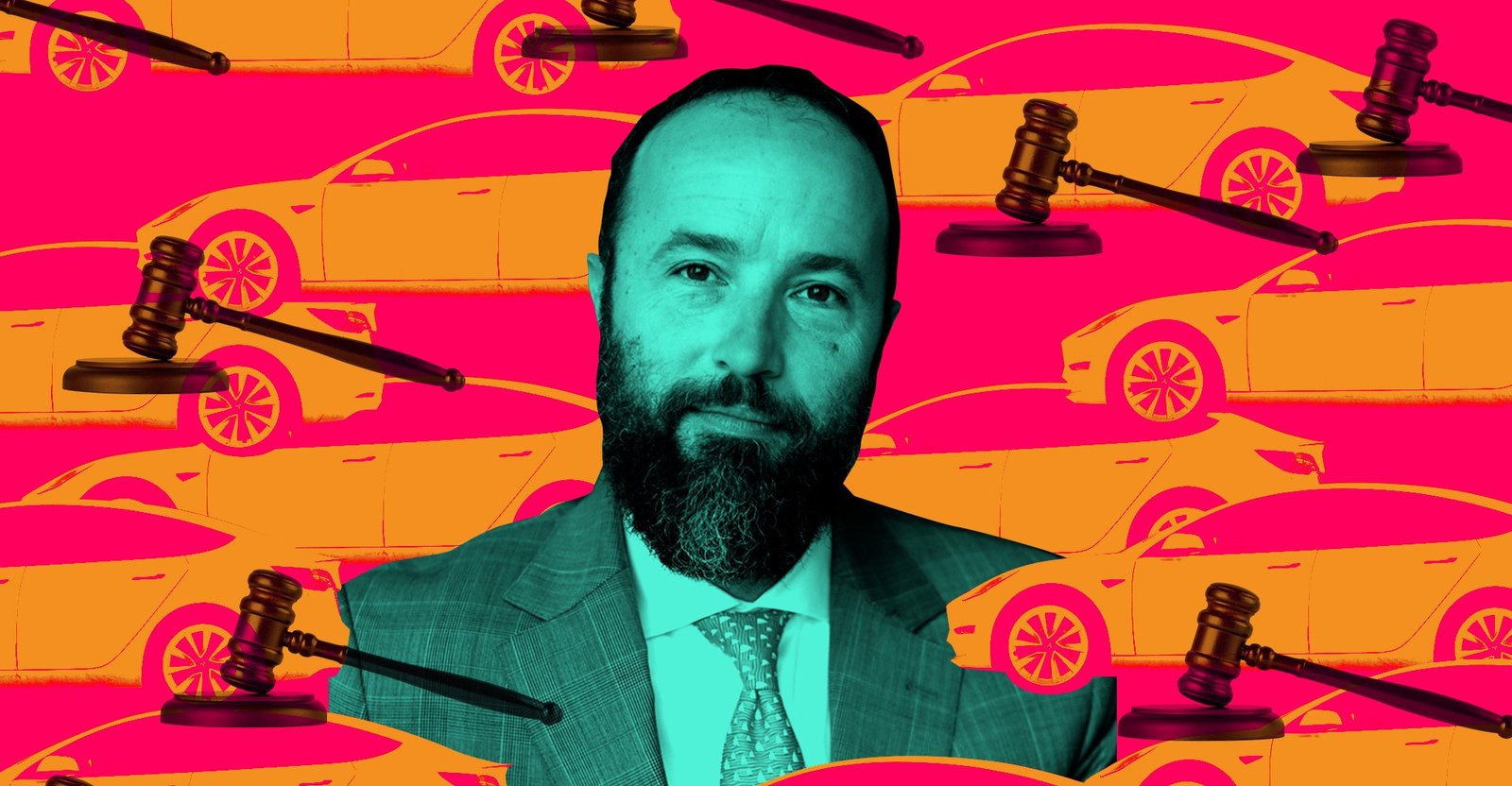
Attorney Brett Schreiber secured a landmark $243 million verdict against Tesla in a Florida wrongful death trial, shattering the automaker’s long-standing streak of avoiding jury trials in fatality cases involving its driver-assist technology.
The jury found Tesla 33 percent responsible for a 2019 crash that killed 22-year-old Naibel Benavides and severely injured Dillon Angulo. While the driver of the vehicle settled years ago, the verdict marks a major legal setback for the company, which has historically preferred secret settlements over public courtroom scrutiny.

The “Two Teslas” Strategy
Schreiber attributes his success to exposing a fundamental contradiction in Tesla’s operations. “There’s Tesla in the showroom and then there’s Tesla in the courtroom,” he explains. While marketing materials and Elon Musk’s public statements tout the vehicles as “fully self-driving,” the company shifts its narrative during litigation, rebranding the technology as a mere “driver assistance feature” once a crash occurs.
By contrasting Musk’s decade-long claims—such as his assertions that autonomous driving is a “solved problem”—with the technical limitations the company argues in court, Schreiber successfully swayed the jury. He emphasized that for an ordinary consumer, Musk’s words effectively define the product’s capabilities and safety expectations.
Unsealing the Truth
A critical component of the trial involved internal documents that were previously hidden from the public. Schreiber encourages the public to monitor the federal docket in Miami, where previously undisclosed exhibits are set to be filed. These documents allegedly prove that Tesla was aware of how and why drivers were misusing its systems for years.
The attorney argues that the Benavides and Angulo families were instrumental in this victory, as they refused a large, secret settlement in favor of bringing the truth to light. “They knew that this was a case and a cause that was bigger than themselves,” Schreiber noted.
The Technical Divide: Lidar vs. Cameras
When asked about Tesla’s approach compared to competitors like Waymo or GM’s Super Cruise, Schreiber criticized the company’s reliance on a camera-only system. He maintains that the “holy trinity” of autonomous safety—lidar, radar, and cameras—is essential for reliability.
Schreiber argues that Tesla’s decision to remove radar and rely solely on cameras is a flawed strategy. He points to internal Tesla documents suggesting that in 2019, the company itself attributed 6 percent of analyzed crashes to Autopilot failures. “We are not anti-autonomous vehicle technology,” he clarified. “We are not anti-progress. It just has to be done the right way.”
Preparing for ‘Round Two’
The legal pressure on Tesla is far from over. Schreiber is already preparing for Maldonado v. Tesla, scheduled for trial in California in just 75 days. Unlike the Florida case, which was subject to a cap on punitive damages, the California trial offers a different landscape for potential penalties.
In this upcoming case, Schreiber plans to introduce testimony from former senior Autopilot leadership, including Sterling Anderson, CJ Moore, and Andrej Karpathy. When confronted with Musk’s public claims about Tesla’s capabilities, these experts have previously testified that such statements were not accurate regarding production vehicles. “He not only betrayed the public, he betrayed his own engineers,” Schreiber said. “That’s what round two is going to look like.”